Modern Image Formats: Why WebP and AVIF are No Longer Optional
Discover how switching to WebP and AVIF can slash your load times, boost your SEO, and keep your users from bouncing.
The "silent killer" of your conversion rate isn't your copy or your pricing. It's the 2.5-second delay caused by a single unoptimized hero image.
In 2025, users don't wait. If your site doesn't feel instant, they're gone.
Most developers are still stuck in the JPEG era. They’re leaving 30% to 50% extra performance on the table by ignoring modern image formats.
The Death of JPEG and PNG
JPEG was invented in 1992. It was revolutionary for its time, but it wasn't built for the modern, high-density web.
PNG is great for icons, but it's a data hog for anything complex. Using a PNG for a photograph is a performance suicide mission.
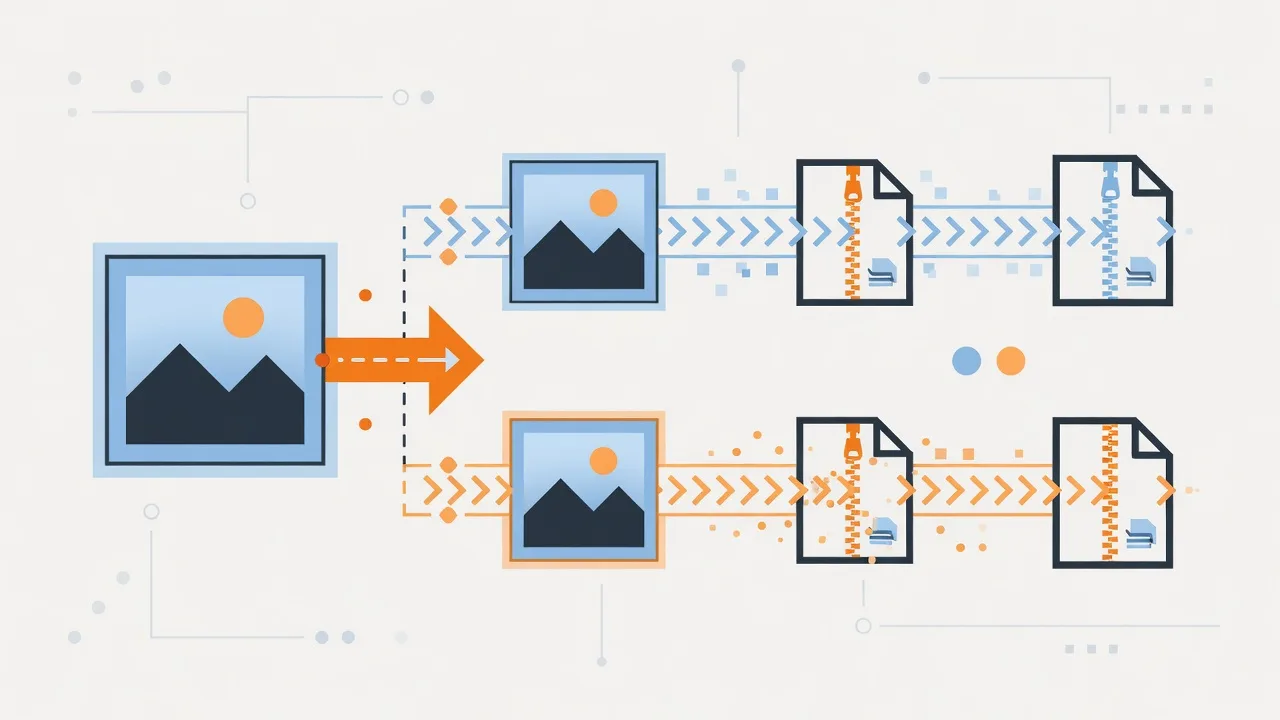
Modern formats like WebP and AVIF solve these legacy problems by using advanced prediction and frequency math.
WebP: The New Standard
WebP is no longer "the future"—it is the present. Every major browser since 2020 has full support for it.
Switching to WebP typically reduces your file sizes by 25-30% compared to JPEG, with zero visible loss in quality.
It also supports transparency and animation, making it a "one-stop shop" for almost every web asset.
AVIF: The Cutting Edge
If WebP is the standard, AVIF is the upgrade. Developed by the Alliance for Open Media, it uses the same tech behind high-end video streaming.
AVIF can shrink a 1MB JPEG down to less than 100KB while keeping the details crisp.
While encoding takes slightly longer, the payoff in "Speed Index" scores is massive. Your users will feel the difference.
Why SEO Loves Small Files
Google doesn't just look at your keywords; it looks at your Core Web Vitals.
Largest Contentful Paint (LCP) is a primary ranking factor. Since the largest element is usually an image, compression is your fastest ticket to the top of Google.
Faster sites rank higher. It’s that simple.
How to Make the Switch
You don't need to manually convert every image. Tools like Compresso handle this automatically in the background.
Implement a <picture> tag in your HTML to serve AVIF to modern browsers and WebP as a fallback.
<picture>
  <source srcset="image.avif" type="image/avif">
  <source srcset="image.webp" type="image/webp">
  <img src="image.jpg" alt="Optimized visual">
</picture>
This ensures every user gets the fastest possible version of your site without breaking for older machines.
Conclusion
The web is getting heavier, but your site doesn't have to.
By adopting WebP and AVIF, you’re not just saving bytes; you’re buying back your users' attention.
Don't let a legacy format hold your business back. Start your migration today.